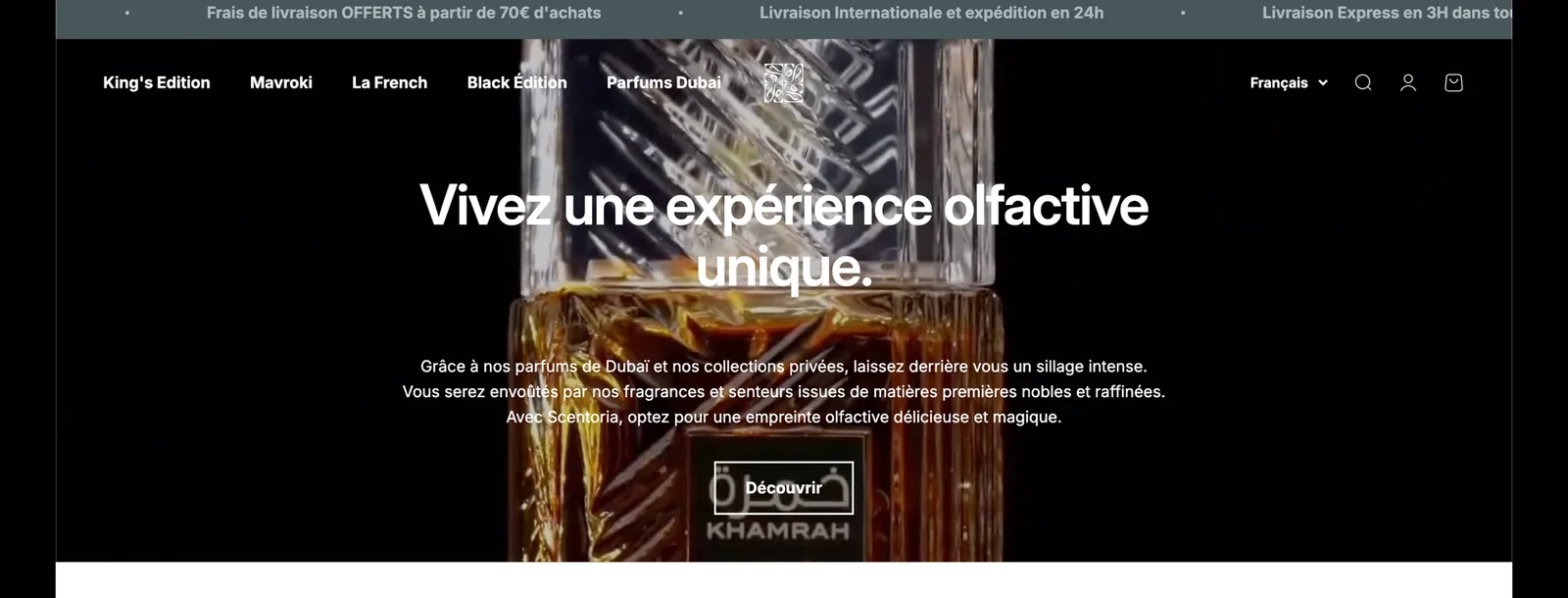
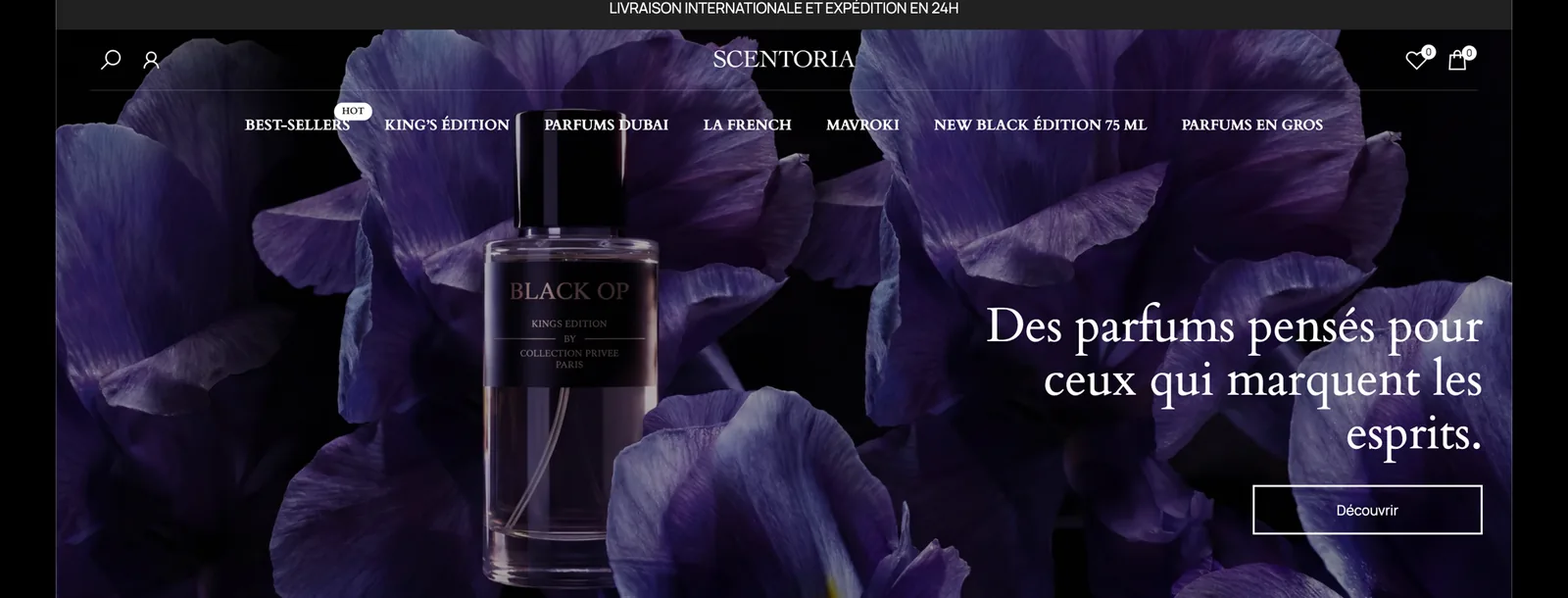
Scentoria sold other people's perfumes. Then it started selling its own.
That sentence is easy to write and hard to execute, because the change is not cosmetic. A reseller and a brand are two different things: to a search engine, to a customer, and to every system that describes a company. The engagement ran roughly seven months across 2024 and 2025, and it covered search, social, influence and a redesign, because the transition touched all of them at once.
The problem is entity, not design
It is tempting to treat a repositioning as a visual project. New identity, new pages, new photography. That work matters, but it is not where the risk sits.
The risk is that search engines have already built a model of what this business is, and that model is about to be wrong. They knew the domain as a retailer of other brands. Authority had accumulated under that description. Rankings, internal link equity, the associations between the brand name and the products it stocked: all of it was attached to a definition that no longer applied.
Do nothing, and the site keeps being understood as the old thing. Rebuild carelessly, and the accumulated authority goes out with the old structure.
Framing decided the plan. Treating the transition as an entity problem rather than a redesign is what put redirects, architecture and internal linking at the centre of the project instead of at the end of it.
Search: rebuilding the definition
Navigation and architecture. The full navigation was rebuilt around the new proposition rather than the old catalogue logic. A reseller navigates by brand, because brand is what the customer arrives looking for. An owned-brand business navigates by its own range. Those are different trees, and the tree is the first thing that tells a search engine what a site is about.
Redirects, mapped rather than bulk-applied. Every URL from the old architecture was mapped onto its counterpart in the new one. This is the unglamorous half of the work and the half that decides whether a transition costs six months of visibility. A blanket redirect to the homepage discards the specific relevance each page had earned. Mapping page to page keeps it.
+20-30% organic clicks and sales. From the SEO work, excluding social, influence and paid contribution. The business changed what it was, and search followed it rather than penalising it.
Experience: turning visits into orders
Product and category discovery. Product and category pages were redesigned with faceted filters, serving two audiences at once. A visitor needs to narrow a range down without thinking about it. A crawler needs a structure it can traverse, with pages that correspond to real demand rather than an explosion of near-identical URLs. Faceted navigation done carelessly produces thousands of thin pages. Done deliberately, it produces the category pages people actually search for.
Performance. The hero video was replaced with an optimised image, cutting LCP and FCP. Not a search tactic in itself, but the first screen is where the largest paint happens and where the most impatient visitors leave.
+46% conversion rate and +8% average order value. Better discovery does two things at once: more visitors find something, and more of them find the thing worth more.
Social: building the demand that search captures
Search captures existing demand. It does not create it. For a name nobody was looking for yet, that is a hard ceiling.
A TikTok strategy ran alongside the search work and lifted sales substantially. It also fed the site's traffic, which is the part people miss: social does not sit in a separate column from search. Someone who sees a product on TikTok and later types the brand name into Google is a search visit that social created. Content that circulates becomes a source that describes the brand, and it accumulates.
Social created the branded search that search could then capture. Without it, the SEO work would have been competing for demand attached to the old catalogue rather than the new name.
Influence: selection as the actual work
The influence strategy ran on Snapchat and brought a significant share of sales. The execution was straightforward. The selection was not.
Influencers were chosen on a detailed reading of which audiences would genuinely respond to Scentoria's products, not on follower counts and not on category adjacency. This is market and audience analysis, the same muscle as reading search demand: understanding what a specific group actually wants, in their terms, then deciding where the brand belongs and where it does not.
A small amount of paid activity ran alongside all of this, at a level low enough that it is not the story.
The match matters more than the reach. A well-chosen creator with a modest audience outperforms a large, indifferent one, and the difference is decided before anything is filmed.
Why the surfaces compound
The instinct is to read this as four projects that happened to share a client: an SEO project, a TikTok project, an influencer project, a redesign.
They were not separable, and treating them as separable is what produces mediocre results in all four.
The site work made the brand comprehensible: this is what this company now is, structured so a machine can read it. The social work made it known: here is why you would care. The influence work made it credible: here are people you already trust, associating themselves with it.
Each one made the others cheaper. Awareness raises branded search, which converts better than anything else. A site that finally explains the brand properly converts the traffic that awareness sends. Third-party content becomes a source that search engines, and now language models, quote when describing the company.
That last point has grown teeth since 2025. Search engines used to be the only systems reading a company's definition. Language models read it too, and they are less forgiving of inconsistency. When the site says one thing, a directory listing says another, and a three-year-old comparison page says a third, the answer a model returns is assembled from whichever it trusts most. It is often not yours.
What transfers
Perfume is incidental. The pattern is not.
Any business that changes what it fundamentally is (a rebrand, a new product line, a move into a new market, a merger, an entry into a new country) creates the same problem. There is an existing machine-readable definition of the company, it is about to become inaccurate, and something has to carry the accumulated authority across to the new one, while enough people learn the new name for search to have anything to capture.
A brand transition used to be a question of whether Google would keep up. Now it is a question of what every system that describes you will say next, and most of those systems are reading sources you do not own.